A monthly newsletter highlighting research, scholarship and creative activity at SDState.
View in browser
Research-Report-Header2
Tarafder_holding_hydrophilic_polydopamine

'Smart glue' helps athletes speed up recovery from tendon injuries

Athletes, particularly athletes in highly physical sports, are prone to tendon injuries. Tendon tears, like rotator cuff tears and Achilles tendon ruptures, are especially debilitating. These injuries almost always require surgery and months of recovery.

South Dakota State University's Jerome J. Lohr College of Engineering is finding a better way to heal these injuries by taking inspiration from the sea.


Mussels, clam-like mollusks found in both saltwater and freshwater habitats, are extremely adept at clinging to objects underwater. Their secret? Sticky proteins they excrete from feet.


Solaiman Tarafder is an assistant professor in the Department of Mechanical Engineering and is leveraging the unique properties of the excreted proteins to create a bioglue adhesive from a compound known as hydrophilic polydopamine. When applied to tendon injuries, Tarafder believes it can promote optimal tendon healing without the need for surgery.

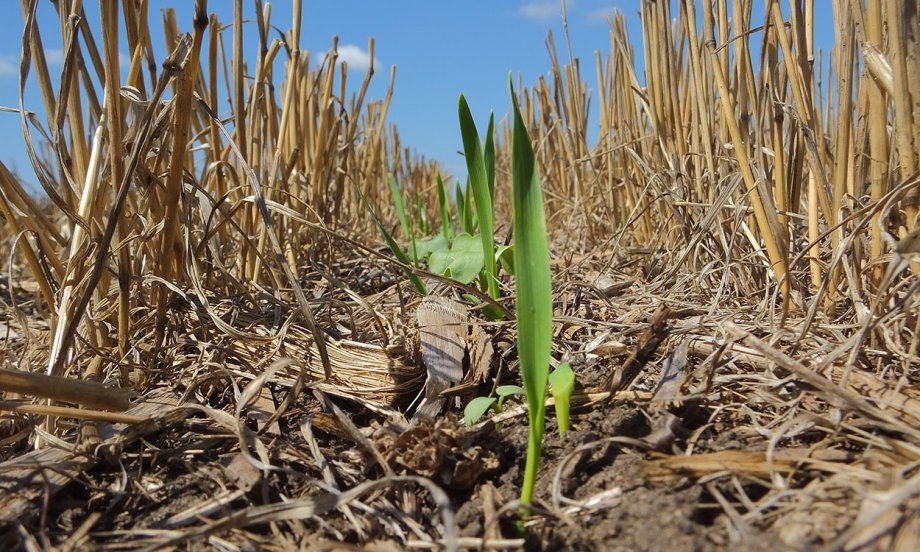
cover crops

Cost share programs create a spillover effect for widespread cover crop adoption

The research behind cover crops is clear. The sustainable agriculture practice enhances soil fertility and structure, improves soil infiltration and water storage, reduces soil erosion, controls weeds and pest and even improves cash crop yields. Cover crops also generate off-farm environmental benefits by scavenging excessive soil nitrogen in corn fields and decreasing nutrient runoff into waterways.


However, the economic benefits of cover crops often take several years to fully materialize. In the meantime, farmers are saddled with upfront costs, like seed, planting and termination, that create a barrier for widespread adoption. Besides cost constraints, farmers in South Dakota face other challenges when planting cover crops, including narrow planting windows and unpredictable cash crop yields.


Recently, Tong Wang and Hailong Jin, associate professors in the Ness School of Management and Economics, published a study in which they explored the role of cost share programs in promoting cover crop adoption.

An, Wenfeng Lab 2015_60

The 3D impact: Haarberg Center making progress in fight against cancer

Kevin and Lorie Haarberg had a dream. After devastating personal experiences with cancer, they wanted to transform treatment and improve outcomes by investing in research that could find new uses for existing drugs on the market.


The Haarbergs’ vision and generosity helped pave the way for the Haarberg Drug, Disease and Delivery (3D) Research Center, which was established in 2021 at South Dakota State University thanks to a five-year, $3.9 million award from the South Dakota Board of Regents and an additional $1.1 million gift from the Haarberg family.


Now four years since its inception, the Haarberg 3D Center is progressing in its mission of transforming treatment of cancer and other diseases. Six companies have been formed thanks to funding from the Haarberg 3D Center. Five researchers have applied for Small Business Innovation Research grants, and 12 patent or provisional patent applications have been developed from Haarberg 3D Center-funded projects.

cells

New study opens pathways for inflammation-fighting treatments 

A new study from South Dakota State University's Department of Biology and Microbiology has identified a protein — ALIX — that can help boost cells' self-healing abilities.

According to the Gergely Imre, the study's lead author, this research will open up new pathways for developing inflammation-fighting treatments. It may also help medical scientists find a way to control excessive immune reactions without shutting down the immune system entirely.

20251015_SDSU-R1Champions-1280

R1 Champions get an inside look at bioprocessing research projects

A group of industry leaders was on campus last month to learn about the many bioprocessing research projects currently in progress at SDState.

Here, researchers are utilizing low-value byproducts from South Dakota's commodities, like corn husks and soybean hulls, to develop high-value bioproducts.

The group also toured the POET Bioprocessing Center and learned about the ways SDState researchers are working to bring these research discoveries into the marketplace.


They also received an update on SDState's road to R1 classification. Notably, the university's research expenditures reached another record high in fiscal year 2025 ($94 million), and doctoral enrollment continued to grow (280, up 12 from the previous year). 

Research in the News


KOTA Territory — "'Smart glue' helps athletes recover from tendon injuries"


The Dakota Scout — "SDSU-conceived 'smart glue' could help millions skip surgery for torn tendons"


The Rapid City Post — "'Smart glue' helps athletes speed up recovery from tendon injuries"


American Ag Network —"Cost share programs create a spillover effect for widespread cover crop adoption"


KELOLAND — "The glue that holds us together" 


Dakota News Now — "Someone you should know: leading the way to a medical breakthrough"


Ag Web — "New high-yield, high-protein winter wheat variety set for farms in the northern plains"


MSN — "Scientists discover ALIX protein can prevent cell death during inflammatory response"


The Brookings Register — "South Dakota State's Haarber Center making progress in fight against cancer"

Follow SDSU Research on LinkedIn
20241018_Fall-Campus-0186

University Marketing and Communications, Communications Center Box 2230, 1007 Campanile Ave, Brookings, SD 57007, 605-688-6161

Unsubscribe Manage preferences